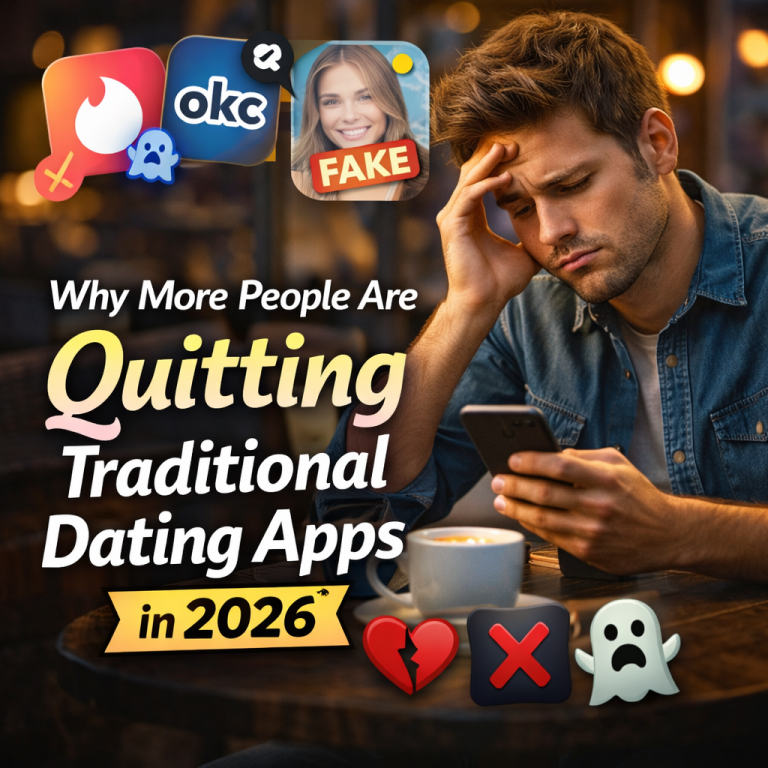
Why More People Are Quitting Traditional Dating Apps in 2026

Online dating was once seen as the ultimate solution for finding love. However, in 2026, a growing number of users are abandoning traditional dating apps altogether. While millions still download these platforms every year, frustration, emotional fatigue, and lack of genuine connections are pushing people away.
So, what’s really happening—and why are users leaving?
For years, dating apps promised unlimited possibilities: swipe, match, chat, repeat. But what started as an exciting way to meet new people has turned into a repetitive and emotionally draining experience for many users.
The main complaints include:
As expectations grow, patience is running out.
One of the biggest reasons users quit dating apps is choice overload. Swiping through hundreds of profiles creates the illusion that someone better is always one swipe away.
Psychologically, this leads to:
Instead of creating connection, too many options often destroy it.
Ghosting—suddenly disappearing without explanation—has become one of the most damaging behaviors in online dating.
On traditional dating apps:
This behavior creates emotional burnout, making users feel disposable and undervalued.
Trust is essential for relationships, yet many dating apps struggle with authenticity.
Users frequently report:
Although platforms try to improve verification, many users feel it’s too little, too late.
Most traditional dating apps are built to maximize time spent inside the app, not successful relationships.
This means:
The result? Users feel manipulated rather than supported.
Some of the most popular dating apps started with good intentions but slowly shifted focus.
For example:
This shift alienated users who were genuinely looking for commitment.
Dating app fatigue is real. Many users report:
Constant exposure to superficial judgment—based on photos and short bios—takes a toll on mental health.
In 2026, people are prioritizing emotional well-being over endless matching.
As traditional apps lose users, alternatives are gaining popularity:
Platforms like Hinge and eHarmony focus on compatibility and intention.
Apps designed for specific lifestyles, beliefs, or interests are growing fast.
Many people now meet partners through:
Authenticity feels higher outside traditional dating apps.
Modern users are no longer asking for more matches—they want better matches.
Top expectations include:
Apps that fail to adapt risk becoming irrelevant.
People aren’t quitting dating apps because they don’t want love—they’re quitting because traditional dating apps stopped delivering meaningful connections.
In 2026, success in online dating depends on:
Platforms that understand this shift will survive. The rest will continue losing users to smarter, more human alternatives.