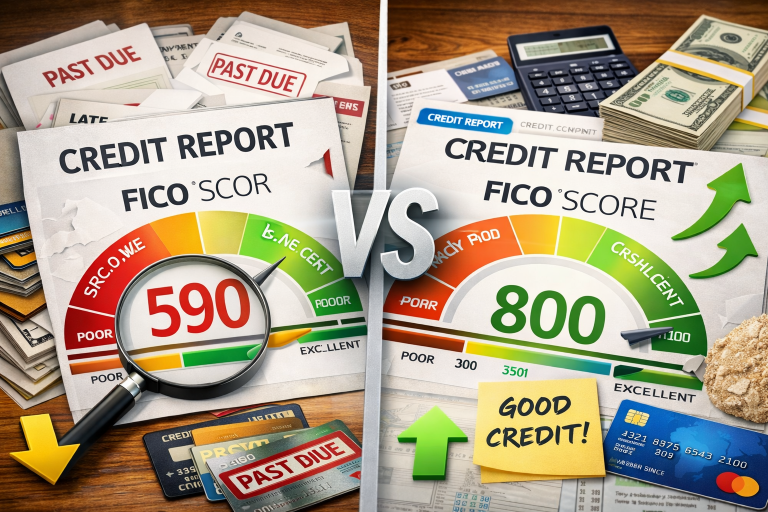
How Credit Scores Really Work in the U.S. (And How to Improve Yours Fast)

Your credit score plays a major role in your financial life, yet many Americans don’t fully understand how it works. From credit cards and loans to renting an apartment or even getting a job, your credit score can directly impact your opportunities.
In 2026, credit systems have become more data-driven and unforgiving. Knowing how your score is calculated — and how to improve it efficiently — is essential for long-term financial stability.
This guide explains credit scores in simple terms and shows proven strategies to increase your score faster and safely.
A credit score is a numerical representation of how trustworthy you are as a borrower. Lenders use this number to evaluate risk before approving loans, credit cards, or financing options.
In the United States, credit scores typically range from 300 to 850. The higher your score, the more reliable you appear to lenders.
A strong credit score can help you qualify for lower interest rates, higher credit limits, and better financial products. A poor score, however, can result in higher costs or outright denial.
Most lenders rely on the FICO scoring model, which evaluates five main factors.
Payment history is the most important component. Late or missed payments can significantly lower your score, even if they occur only once.
Credit utilization measures how much of your available credit you are using. Using too much of your limit can signal financial stress.
Length of credit history reflects how long you’ve been using credit. Older accounts generally help your score.
Credit mix considers the variety of credit types you use, such as cards, loans, or mortgages.
New credit activity includes recent applications, which can temporarily reduce your score.
Understanding these factors allows you to control and optimize your credit behavior.
Credit scores are generally categorized into ranges.
Scores below 580 are considered poor and may limit access to credit.
Scores between 580 and 669 are fair and may result in higher interest rates.
Scores between 670 and 739 are good and qualify for most standard products.
Scores above 740 are very good or excellent and unlock premium benefits.
Improving your score even slightly can result in meaningful financial savings over time.
Many people damage their credit score without realizing it.
One common mistake is carrying high balances relative to credit limits. Even if payments are made on time, high utilization can hurt your score.
Another error is closing old credit accounts, which can shorten your credit history and reduce available credit.
Applying for too many cards or loans in a short period also signals risk to lenders.
Ignoring credit reports is another costly mistake. Errors and fraud can remain unnoticed and damage your score if not corrected.
The fastest way to improve your credit score is to reduce credit card balances. Keeping utilization below 30% — ideally under 10% — shows responsible usage.
Making all payments on time is non-negotiable. Setting up automatic payments can prevent missed deadlines.
Avoid applying for unnecessary credit while working on improvement.
If possible, become an authorized user on a well-managed account. This can add positive history to your report.
Regularly reviewing your credit report allows you to dispute errors and monitor progress.
Building a good credit score is not a one-time effort. Consistency matters.
Use credit strategically, not emotionally. Borrow only what you can repay comfortably.
Monitor your score periodically to stay informed and proactive.
A healthy credit score is one of the most powerful financial tools you can have — when managed correctly, it opens doors instead of closing them.