Cashback vs Travel Rewards Credit Cards: Which One Saves You More Money in 2026?

Choosing the right credit card can significantly impact your finances, yet many people select one without understanding how rewards truly work. Two of the most popular options today are cashback credit cards and travel rewards credit cards. While both offer attractive benefits, they serve very different financial lifestyles.
In 2026, with rising living costs and smarter consumers, choosing the right rewards structure is more important than ever. This guide breaks down the real differences, benefits, and pitfalls so you can decide which card actually saves you more money.
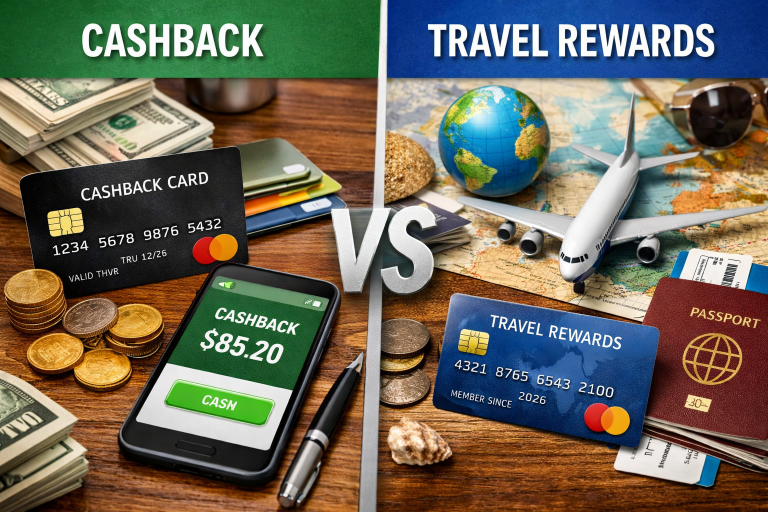
Cashback credit cards reward you with a percentage of your spending returned as cash. Typically, this ranges from 1% to 5% depending on the category, such as groceries, gas, dining, or online shopping.
One of the biggest advantages of cashback cards is simplicity. You spend, earn rewards, and receive real money that can be redeemed as a statement credit, bank deposit, or sometimes even cash.
For everyday expenses, cashback cards provide predictable value. A 2% cashback rate means you know exactly how much you’re earning, regardless of how or where you spend.
These cards are especially popular among people who prefer straightforward financial tools and don’t want to manage points, conversions, or blackout dates.
Travel rewards credit cards earn points or miles instead of cash. These rewards can be redeemed for flights, hotels, car rentals, and sometimes travel upgrades.
Unlike cashback cards, the value of travel rewards can fluctuate. One point might be worth one cent—or significantly more—depending on how it’s redeemed. Strategic travelers often maximize value by transferring points to airline or hotel partners.
Many travel cards also include premium benefits such as airport lounge access, travel insurance, free checked bags, and no foreign transaction fees.
However, these benefits usually come with annual fees and more complex reward systems, making them better suited for frequent travelers.
The most important difference between cashback and travel rewards cards is flexibility versus potential value.
Cashback offers guaranteed value. A dollar earned is always worth a dollar. Travel rewards, on the other hand, can deliver higher value but require planning and smart redemption.
Another major difference is ease of use. Cashback cards are simple and require no learning curve. Travel cards often require understanding point systems, redemption rules, and travel partners.
Finally, lifestyle plays a critical role. If you travel occasionally or prefer financial simplicity, cashback usually wins. If you travel often and enjoy optimizing rewards, travel cards may offer superior value.
The best credit card depends entirely on how you spend and live.
If most of your expenses go toward groceries, bills, fuel, and online purchases—and you rarely travel—cashback cards tend to provide more consistent benefits.
On the other hand, if you frequently book flights, hotels, or international trips, travel rewards cards can unlock experiences that cashback simply can’t match.
Another key factor is discipline. Travel rewards only offer high value when redeemed properly. If points sit unused or are redeemed poorly, cashback would have been the better choice.
In short, everyday spenders usually benefit more from cashback, while strategic travelers benefit more from rewards points.
Many users overlook important benefits when choosing a card. Cashback cards sometimes include extended warranties, purchase protection, and price guarantees.
Travel cards often offer hidden perks like trip cancellation insurance, rental car coverage, and priority boarding—features that can save hundreds of dollars per trip.
A common mistake is chasing high signup bonuses without considering long-term value. Another is ignoring annual fees that outweigh rewards earned.
The smartest approach is to calculate how much you realistically spend each year and match that behavior to the card’s reward structure.
There is no universal winner between cashback and travel rewards credit cards. The best option is the one that aligns with your lifestyle, spending habits, and financial goals.
In 2026, cashback cards remain the safest and most reliable choice for most consumers. They offer transparency, flexibility, and immediate value.
Travel rewards cards, however, continue to dominate for those who travel frequently and know how to maximize points effectively.
The smartest consumers often use both—one cashback card for daily spending and one travel rewards card for trips—creating a balanced and optimized rewards strategy.