Why More People Are Quitting Traditional Dating Apps in 2026

Saving money has become increasingly difficult as daily expenses continue to rise. Subscription services, digital payments, and inflation make it easy to lose track of where your money goes. That’s why money-saving apps have become essential financial tools rather than optional extras.
In 2026, these apps are smarter, more automated, and easier to use than ever before. When used correctly, they can help you regain control of your finances and build healthier money habits.
Modern spending is largely invisible. With digital wallets, contactless payments, and automatic renewals, people often spend money without feeling it.
Money-saving apps solve this problem by making your financial behavior visible again. They track expenses, highlight patterns, and reveal unnecessary costs.
As living expenses increase, even small improvements in budgeting can result in significant savings over time. These apps provide structure and accountability without requiring financial expertise.
The biggest advantage of savings apps is awareness. When you see where your money goes, you naturally begin making better decisions.
Many apps categorize spending automatically, helping you identify problem areas such as dining out or impulse shopping.
Some tools also automate savings by rounding up purchases or transferring small amounts into savings accounts regularly. This “set it and forget it” approach makes saving feel effortless.
Over time, these small changes create meaningful financial improvements.
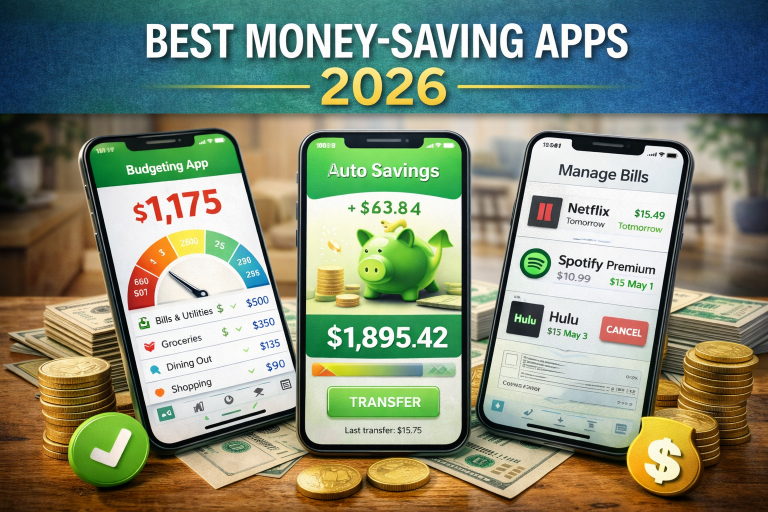
There are several categories of money-saving apps, each serving a different purpose.
Budgeting apps focus on organizing income and expenses. They help users plan monthly spending and stick to financial goals.
Expense trackers provide detailed insights into spending habits, making them ideal for people who want granular control.
Automatic savings apps move small amounts into savings accounts without manual effort.
Subscription management apps identify recurring charges and help cancel services you no longer use.
The best approach is often combining two or more app types for a complete financial system.
Not all money-saving apps deliver real value. The most effective ones share common features.
User-friendly design is essential. If an app is confusing, people stop using it.
Real-time tracking helps users stay aware of their spending as it happens.
Automation reduces friction and increases consistency.
Strong security measures are critical, as these apps handle sensitive financial data.
Finally, customization options allow users to align the app with personal financial goals.
Many users expect instant results and abandon apps too quickly. Saving money takes time and consistency.
Another mistake is using too many apps simultaneously, which creates confusion rather than clarity.
Some users ignore app insights and fail to act on the data provided.
Others rely solely on technology without adjusting spending behavior.
Apps are tools, not solutions by themselves. Real change comes from combining technology with conscious decisions.
When used correctly, money-saving apps are absolutely worth it. They simplify budgeting, encourage better habits, and reduce financial stress.
However, their effectiveness depends on user engagement and realistic expectations.
In 2026, these apps are among the most accessible and powerful tools available for improving personal finances.
The key is choosing the right app for your lifestyle and committing to consistent use.